Broadband progress can sometimes feel invisible, especially when much of the work happens gradually and behind the scenes. Years of planning and coordination often take place before new infrastructure becomes visible in the communities it is meant to serve.
Recent side-by-side maps shared by the Vermont CUD Association help make that progress easier to see.
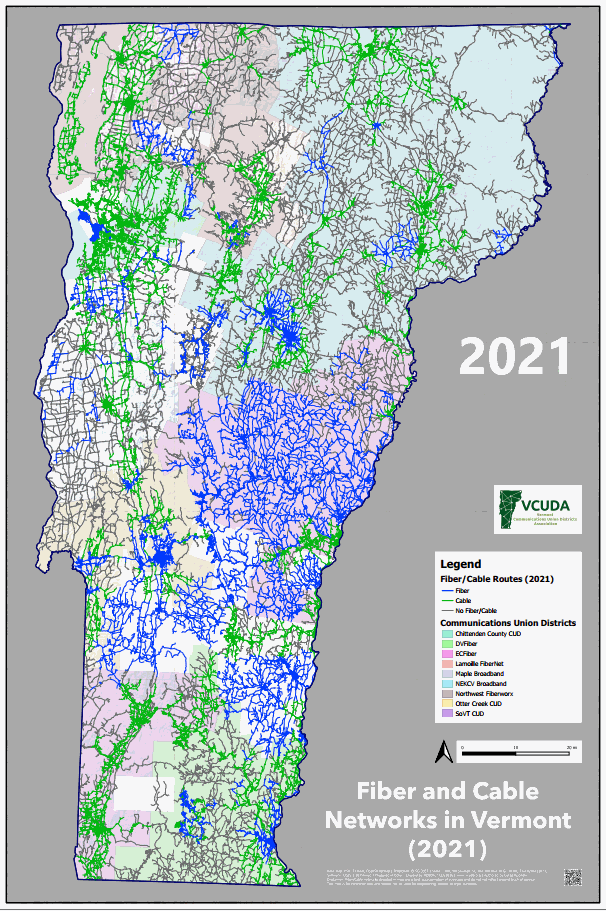
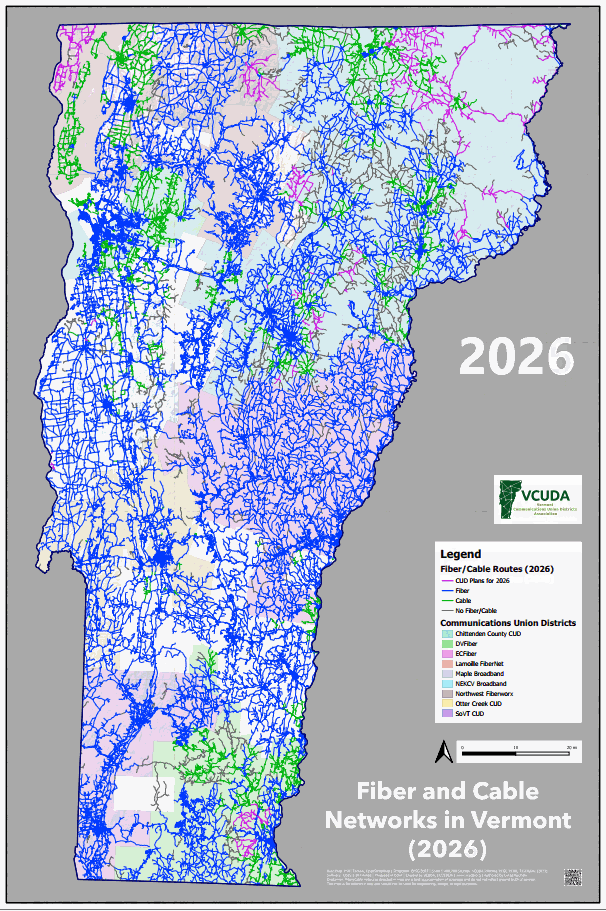
Comparing broadband networks from 2021 to today, these maps show how fiber and cable infrastructure has expanded across Vermont over time. Fiber routes, shown in blue, and cable routes, shown in green, now extend into many areas that previously had little or no fixed broadband infrastructure. What once appeared as large gaps on the map is now taking shape as connected networks, reflecting years of coordinated planning and on-the-ground buildout led by Vermont’s Communications Union Districts.
What is a Communications Union District?
A Communications Union District, or CUD, is a locally governed entity that enables towns to work together to plan, build, and manage broadband infrastructure. In Vermont, CUDs were created to give communities a way to address connectivity challenges collectively, especially in rural and hard-to-serve areas.
Today, Vermont has eight CUDs in operation: Northwest Fiberworx, Lamoille FiberNet, Maple Broadband, ECFiber, Otter Creek CUD, Southern Vermont CUD, DVFiber, and NEKCV (which now consists of both NEK Broadband and CVFiber). There geographic regions are shown in the map below.
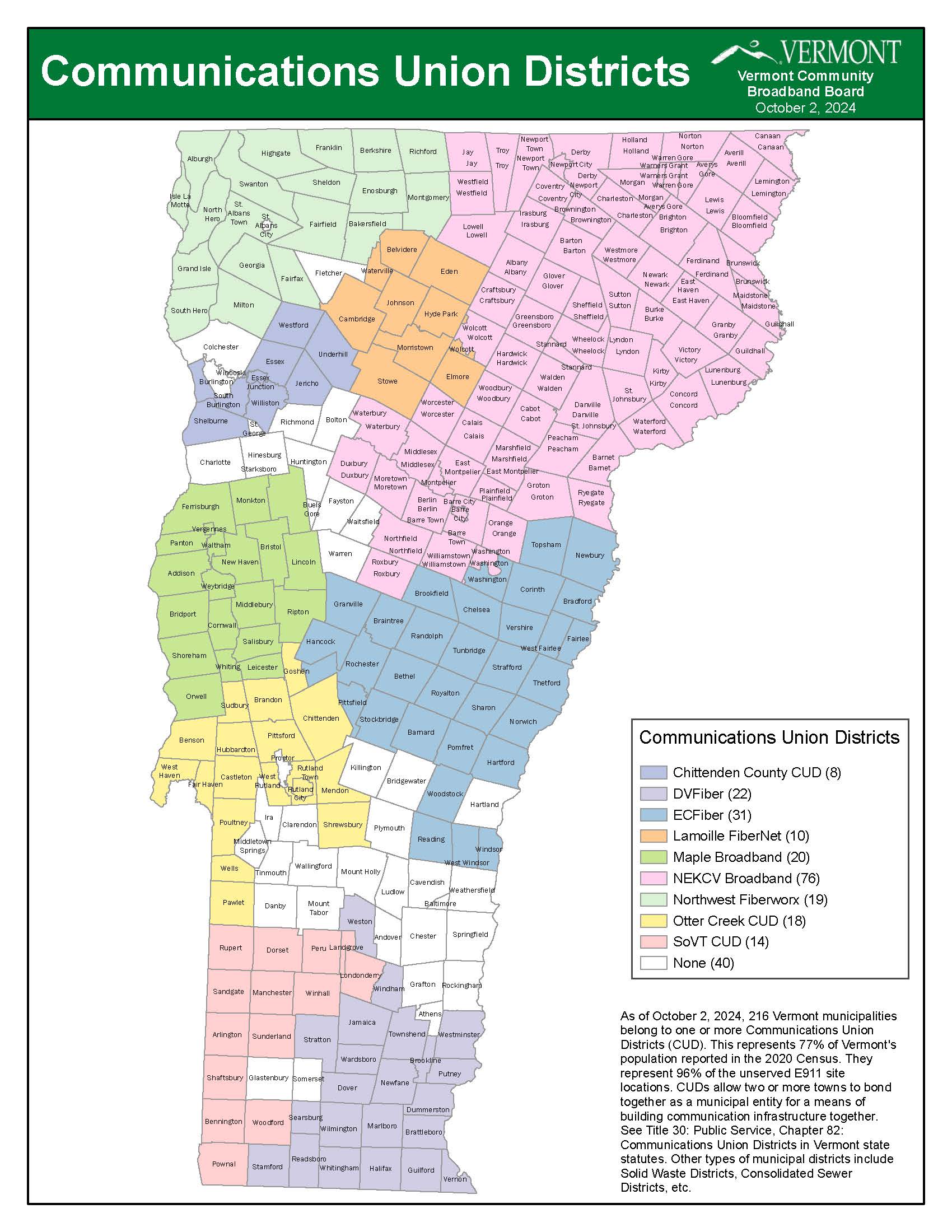
At the statewide level, the Vermont CUD Association (VCUDA) helps support collaboration among these CUDs, enabling them to share resources, scale purchasing power, and reduce overall costs. VCUDA also serves as a collective voice for the CUDs, representing their interests and policy positions to the Vermont Community Broadband Board, the General Assembly, and other state and national partners.
How did Mission Broadband help?
Mission Broadband worked alongside several of Vermont’s CUDs to support broadband planning and deployment as projects moved from funding into construction. As part of this work, Mission Broadband provided comprehensive outside plant (OSP) construction oversight for multiple CUDs, helping ensure fiber networks were built in alignment with approved designs and regulatory requirements, with a focus on quality, safety, and long-term reliability.
This oversight spanned the full construction lifecycle, from pre-construction review through final testing and certification. By helping CUDs identify issues early, maintain accurate documentation, and confirm network performance, Mission Broadband supported organizations such as NEKCV and Maple Broadband as they translated grant-funded plans into reliable, community-owned broadband infrastructure.
Looking Ahead
The maps shared here remind us of the significant progress made through years of planning, coordination, and on-the-ground work to expand broadband access across Vermont. As additional projects move forward, including those supported by BEAD, that same collaborative, community-led approach will remain central to building reliable networks that serve communities for the long term.
Interested in how Mission Broadband can help support your community-led broadband project? Reach out to our team today.